

 English
 Français
 Deutsch
 Русский
 Español
 Português
 عربي
عربي Tiếng Việt
 Indonesia
 हिन्दी
दुनिया की सेवा करना
फ़ोन : +86 -18005440164
फ़ोन : +86 -15621270096
Whatsapp : +86 -18005440164
Whatsapp : +86 -15621270096
ईमेल : luna@nuokungeo.com
ईमेल : jone@nuokungeo.com
PP (Polypropylene) and PET (Polyester) are both widely used synthetic carpet fibers. PP carpet has low water absorption and offers good moisture resistance, stain resistance and color stability, making it a practical option for exhibition carpet, event carpet, temporary flooring and some cost-sensitive commercial projects. PET carpet generally offers good softness and color clarity, as well as resistance to many water-soluble stains, making it suitable for selected offices, meeting spaces and low- to medium-traffic commercial areas.
However, the fiber alone does not determine the performance of the carpet. For airports, shopping mall corridors and busy hotel areas, buyers should also compare high-resilience fibers such as nylon. Therefore, the key to PP or PET carpet is not simply choosing the “better” material, but matching the carpet construction to the actual commercial application.
| Item | Polypropylene Carpet | Polyester Carpet |
| Softness | Moderate, construction dependent | Generally good |
| Resilience | Generally lower than nylon | Generally lower than high-performance nylon |
| Typical Applications | Exhibitions, events, temporary and selected commercial projects | Offices, meeting spaces and low- to medium-traffic areas |
| Fade Resistance | Generally good | Depends on fiber and dyeing method |
| Moisture Resistence | Good | Good |
1. Improving Interior Appearance and Defining Spaces
Carpet texture, pattern, and installation layout all influence the appearance of a commercial interior. Hotels, meeting rooms, office areas, and exhibition spaces can use different carpet designs to create visual separation between functional zones. In exhibition venues, temporary carpet installation provides a consistent floor appearance and helps accommodate different event layouts.
2. Reducing Footstep Noise and Improving Indoor Acoustics
Many venues often have constant pedestrian movement. Hard flooring can reflect sound from footsteps, moving chairs, and other indoor activities. Carpet surfaces and their underlying structure can absorb some sound energy and reduce disturbances caused by foot traffic.
3. Providing a More Comfortable Walking Surface
Compared with hard surfaces such as tile and stone, carpet provides a softer surface underfoot. This can be useful in hotel rooms, offices, meeting spaces, and selected commercial lounges. However, softness is not always the priority. High or loose pile may make it harder to move suitcases, office chairs, or service carts. In areas with frequent rolling traffic, low-pile and tightly constructed carpet products are generally worth evaluating first.
4. Protecting Existing Floors and Supporting Daily Use
In some commercial applications, carpet acts as a surface covering that reduces direct contact between everyday activity and the underlying floor finish. Temporary carpet in exhibition halls and event venues can also cover existing floors during an event and provide a consistent visual setting.
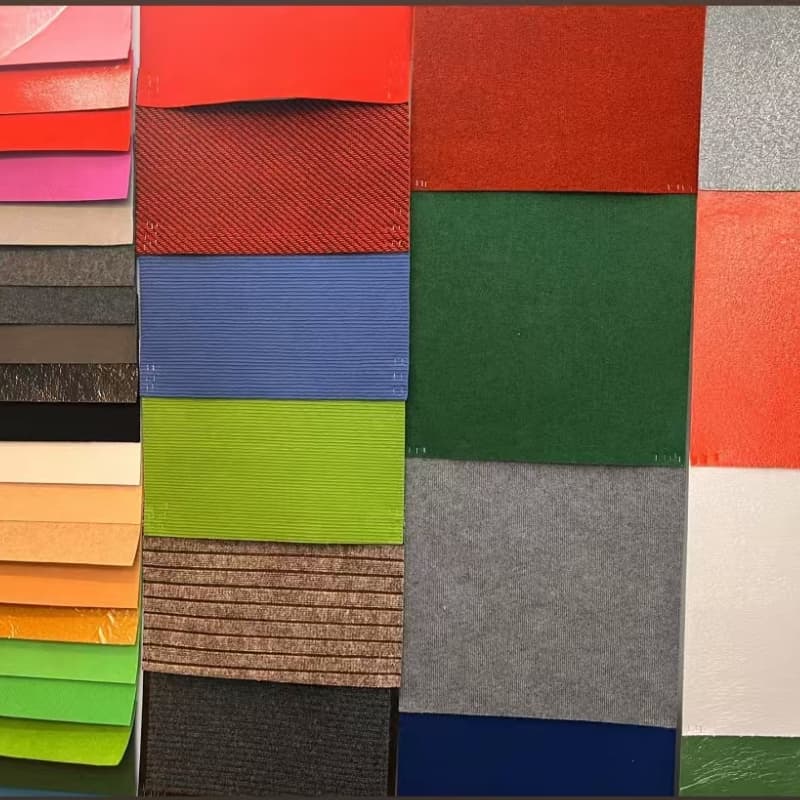
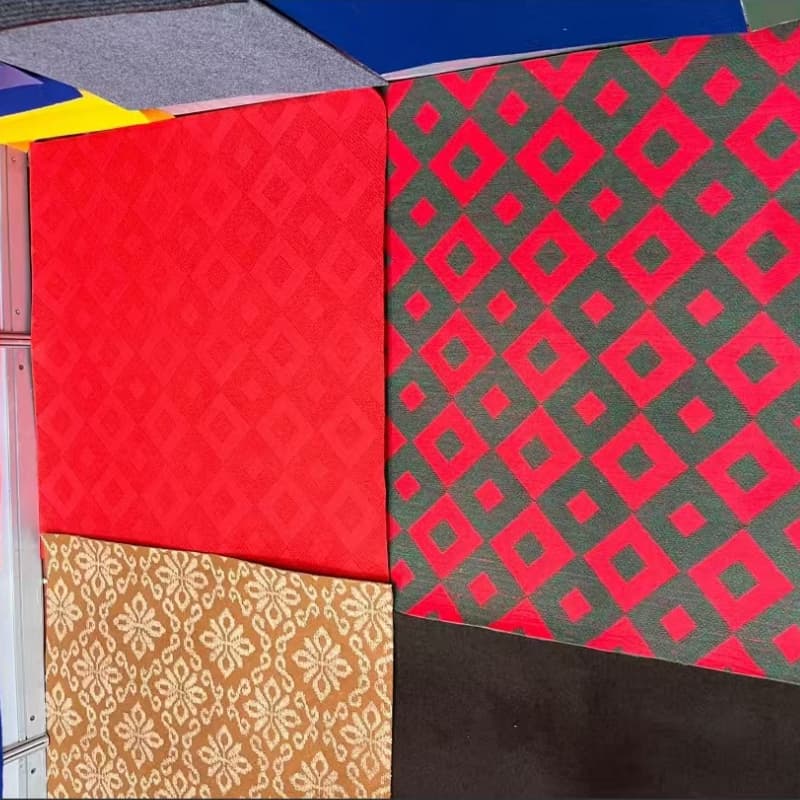
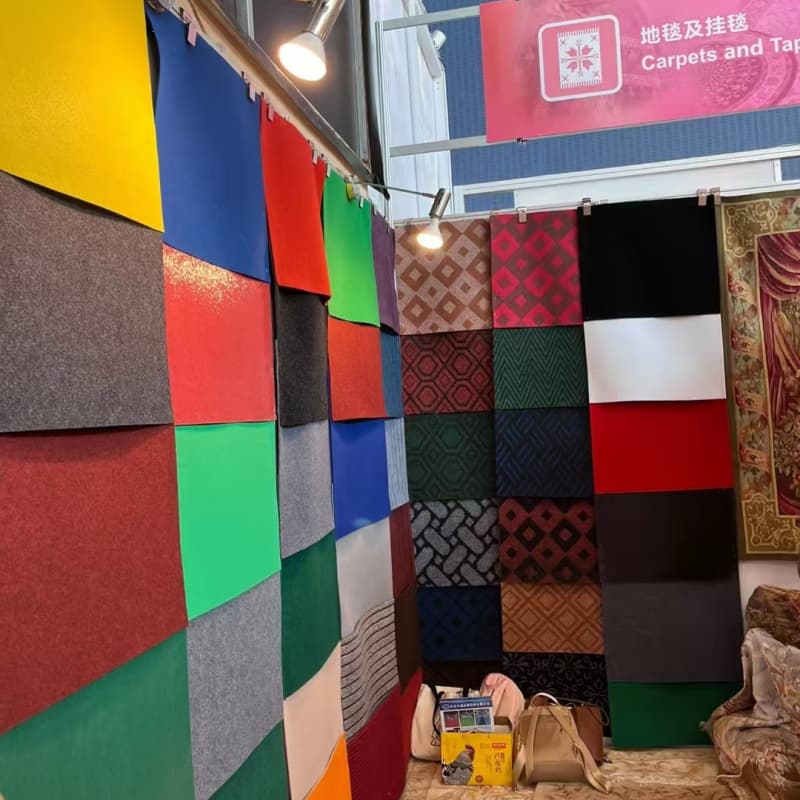
Consider Polypropylene Carpet When:
1. The project is cost-sensitive
PP can be a practical candidate when the project needs tighter control of initial material cost and traffic is not exceptionally heavy.
2. Exhibitions or temporary events
Event carpet often prioritizes cost, installation speed, roll handling, and removal. Needle-punched PP carpet can be considered, subject to the actual product construction and face weight.
3. The office has low to medium traffic
For offices without extremely intensive public circulation, PP may offer a practical balance between cost and routine maintenance.
4. Selected hotel guest rooms
Guest rooms normally place greater emphasis on comfort, appearance, and cleaning than hotel corridors. Some PP cut-pile carpets can be considered, provided they meet the project’s fire and performance requirements.
Consider Polyester Carpet When:
1. Color and design are important
PET can be considered when the project requires strong color expression, decorative effects, or a softer visual character.
2. Office or meeting space
For moderate-traffic areas dominated by pedestrian use rather than heavy rolling loads, PET can be a reasonable candidate.
3. Soft underfoot feel matters
Meeting rooms, lounges, and display spaces may place greater emphasis on comfort and interior atmosphere, making PET worth evaluating.
In 2015, Holiday Inn Schermerhorn in Downtown Brooklyn, New York, carried out a custom carpet design and installation project for its hotel corridors. With approximately 246 guest rooms, the corridors experience frequent daily traffic from guests and staff, so the carpet needed to handle regular use while fitting the hotel’s overall interior style.
The project team worked with the architect, owner’s representative and hotel management team to develop the design and made several adjustments based on project feedback. The final solution used custom wall-to-wall commercial carpet featuring horizontal lines and a reduced doorway border design. This created a more continuous flooring appearance while making the long corridors look visually wider. It also maintains a consistent visual connection with the hotel’s interior design. The completed carpet design provided a practical and visually coordinated flooring solution for the hotel’s high-traffic corridor areas.
Q1: Which is better, PP or PET carpet?
PP may be practical for cost-sensitive, low- to medium-traffic and selected temporary applications. PET may be worth considering where color, softness, interior design, or recycled content is important. For heavy-traffic commercial areas, buyers should also compare nylon and higher-performance constructions.
Q2: Is PET carpet suitable for offices?
Yes. PET can be considered for low- to medium-traffic offices, meeting rooms, and display areas. Where office chairs move continuously, buyers should confirm caster-chair and appearance-retention performance.
Q3: Does thicker commercial carpet last longer?
Not necessarily. Thickness affects overall structure and underfoot feel, but it does not directly determine abrasion resistance or service life. Many factors all influence long-term performance, such as fiber, face weight, density, construction, backing, installation, and maintenance.
Q4: Why choose us?
Certification: CE/ISO 9001/ASTM
15-day delivery: Direct from our Shandong manufacturing base (FOB Qingdao)
Strict Quality Control: We conduct mandatory pre-production sampling and comprehensive final inspections before every shipment.
एक संदेश छोड़ें
Scan to Wechat/Whatsapp :




 IPv6 नेटवर्क समर्थित